
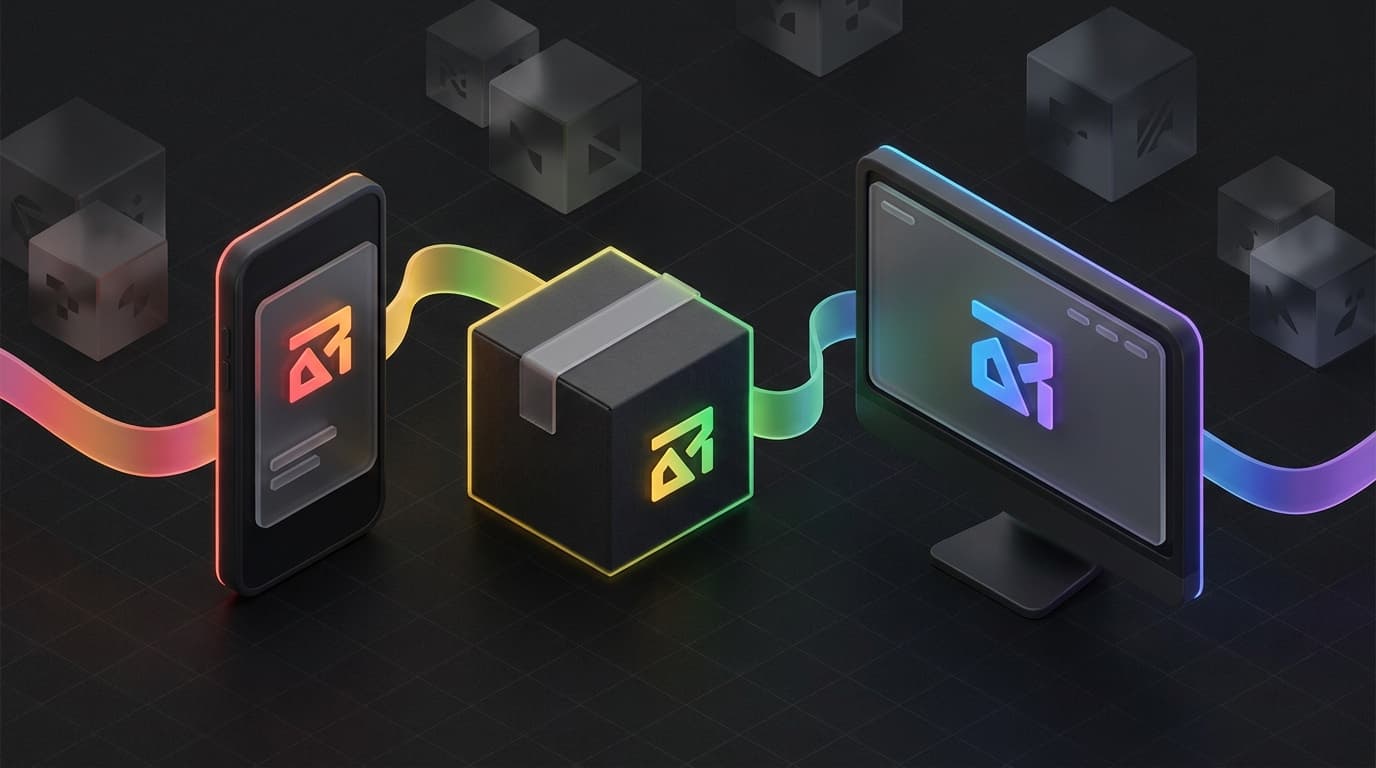
Most e-commerce brands on marketplaces leave 10-20% revenue on the table. Not because of bad products. Not because of insufficient ad spend. Because of a lack of consistent brand identity.
That's not an estimate. Industry research surveying hundreds of brand managers consistently finds that consistent branding across all channels adds around 10-20% revenue. And Motista research shows that emotionally connected customers have 306% higher lifetime value. On top of that, marketing works demonstrably harder when your brand is recognisable everywhere.
A note for the international reader: throughout this article we reference Bol.com next to Amazon. Bol.com is the dominant marketplace in the Netherlands and Belgium, comparable in role to Amazon for these markets. The principles apply to any marketplace where a brand competes for attention against thousands of similar listings.
Yet most private label sellers on marketplaces have no brand identity system. They have a logo. Maybe a colour palette. But no visual identity carried through across listings, packaging, webshop and social media.
This article shows what that costs, why it happens, and how to fix it.
Why brand consistency directly drives revenue
The number is clear: 10-20% revenue growth. But what's behind it?
Brand consistency works on three levels simultaneously. Recognition, trust and loyalty. Each level has a direct financial impact.
Recognition. The vast majority of consumers expect the same brand experience across every channel. If your marketplace listing looks different from your webshop, and your packaging looks different from your Instagram, you lose that recognition. Every inconsistency is a moment of doubt. And doubt kills conversion.
Trust. Consistency signals professionalism. A brand that looks the same everywhere feels reliable. A brand that looks different on every platform feels amateurish. That difference determines whether someone clicks, buys or scrolls past.
Loyalty. This is where it gets truly interesting. Motista research shows that emotionally connected customers have 306% higher lifetime value. Three times as much. That emotional connection doesn't come from a good product alone. It comes from a brand experience that is consistent, recognisable and meaningful.
And there's a fourth effect: every euro you spend on marketing works harder when your brand is recognisable everywhere. Without brand identity, you're pouring marketing budget into a black hole, because the recognition that ads should reinforce is missing.
It's not a luxury. It's the foundation everything else rests on.
What most marketplace sellers get wrong
Open any major marketplace. Click on any category. Scroll through the listings.
What you see: dozens of products with white-background photos. No visual cohesion. No brand recognition. No reason to choose one product over another, except price and reviews.
This is the reality for 90% of marketplace sellers. And it's exactly why they hit a ceiling.
Problem 1: the logo-as-brand misconception
Most sellers think they have a brand as soon as they have a logo. They get a logo designed on Fiverr, pick two colours, and call that their brand identity.
But a logo is not a brand. A brand is a system. It encompasses positioning (what do you stand for?), visual identity (what does that look like?), verbal identity (how do you sound?), and consistent application (is it the same everywhere?).
A logo without a system is an image without meaning.
Problem 2: channel-by-channel thinking
Many sellers build their presence channel by channel. Bol.com gets certain photos. Amazon gets different photos. The webshop has yet another design. Instagram does its own thing.
The result: five channels, five identities. The customer who sees you on one marketplace doesn't recognise you on Instagram. The customer who visits your webshop sees no connection to your Amazon listing. Each time they start from scratch building trust.
That's the opposite of what works. The 9 out of 10 consumers who expect the same brand experience on every channel? You're losing them.
Problem 3: differentiating through features instead of brand
The standard marketplace approach: list as many features as possible. Dimensions, weights, specifications, certifications. Bullet points full of technical details.
The problem: your competitor does exactly the same thing. Same features, same bullet points, same format. The customer can't see the difference. So they choose on price.
Brand identity solves this. Not by ignoring features, but by presenting them within a recognisable visual and verbal style that can only come from you.
The three pillars of e-commerce brand identity
An e-commerce brand identity rests on three pillars. Miss one and the system doesn't work.
Pillar 1: Positioning
Before you choose a colour or take a photo, you need to know what you stand for. Positioning answers three questions:
- Who are you for? Not "everyone." A specific audience with specific needs.
- What makes you different? Not "quality" or "service." Something concrete that a competitor can't claim.
- Why would someone pay more? The reason behind the premium price.
Without positioning, every visual choice is arbitrary. With positioning, every choice has a reason.
Look at Rituals. They sell soap and candles. Commodities. But their positioning around mindfulness and rituals makes it impossible to compare them with a bottle of Dove. They don't compete on price. They compete on meaning.
Pillar 2: Visual identity
Visual identity is more than a logo and colours. It's a complete system of visual choices that together make your brand recognisable:
- Colour palette. Not two colours, but a system of primary, secondary and accent colours with clear usage rules.
- Typography. Typefaces that match your positioning and are legible at all screen sizes.
- Image style. The way your product photography, lifestyle imagery and infographics look. Lighting, composition, background colours, propping.
- Graphic elements. Patterns, icons, shapes that make your brand recognisable without a logo.
- Brand guidelines. A document that specifies how everything is applied, so every listing, every social post, every package is consistent.
Ace & Tate is a strong example here. Their visual identity is so consistent that you recognise an Ace & Tate image without seeing the logo. The colour grading, the models, the composition: always recognisable. That's the goal.
Pillar 3: Verbal identity
How does your brand sound? Which words do you use? Which don't you use? How do you address customers?
Verbal identity includes:
- Tone of voice. Formal or informal? Playful or serious? Expert or approachable?
- Word choice. Words you always use, words you never use.
- Copy guidelines. How do you write product titles, bullet points, descriptions?
- Brand promise. The core of what you communicate, in one or two sentences.
Coolblue is the Dutch textbook example. Their tone of voice is so recognisable that you can identify Coolblue copy without seeing their name. "Everything for a smile" isn't just a slogan. It guides every text, every email, every customer service interaction.
How brand identity increases conversion on marketplaces
Brand identity isn't an abstract marketing term. It has direct, measurable impact on your marketplace performance.
Higher click-through rate
On a search results page, you have a fraction of a second to stand out. A listing with professional, brand-aligned imagery draws more clicks than a generic white-background photo.
The effect compounds. More clicks mean a better conversion ratio in the platform's eyes. A better conversion ratio means a higher ranking. A higher ranking means more visibility. This is the flywheel effect that Amazon itself describes: better content leads to more sales leads to better positioning leads to even more sales. We worked through how to start that flywheel in our guide to optimising bol.com listings.
Lower return rates
Professional brand identity sets expectations. When those expectations match what the customer receives, the return rate drops. The product looks as promised. The packaging confirms the quality. The experience is consistent from listing to unboxing.
On most marketplaces, return rates factor into your performance scores. Lower returns mean lower costs and a better position on the platform. The role of consistent packaging and unboxing in this story is something we covered separately in the ROI of packaging design in e-commerce.
Higher average order value
Brands justify higher prices. A product with brand identity isn't compared on price alone. It's compared on value. And value is subjective. A well-positioned brand with consistent visual identity can charge 20-40% more than a brandless competitor for a comparable product.
That's not theory. It's what we see with every project where we roll out a complete brand identity across all channels. Margins increase. The customer accepts the higher price. Because the brand justifies it.
More repeat purchases
This is where the 306% lifetime value comes back. Customers emotionally connected to your brand come back. They don't search the marketplace for "pillowcase" again. They search for your brand name.
Brands build relationships. Products build transactions. The difference in lifetime value is enormous.
Brands that get it right (and what you can learn from them)
It's easy to say brand identity matters. It's more convincing to show who does it well and why.
Rituals
Rituals sells products you can buy at any drugstore. Soap, creams, candles. The difference is entirely in the brand. Their positioning around mindfulness and rituals transforms an everyday product into an experience. The packaging, the scent, the store experience, the online presentation: everything tells the same story.
The result: premium prices in a commodity market. Customers who are proud of their purchase. A brand that doesn't compete on price but on meaning.
Lesson for e-commerce: Your product doesn't have to be unique. Your brand experience does.
Ace & Tate
Ace & Tate sells glasses. A market dominated by a few big players. Their differentiation: a visual identity so tight and consistent that every image, every listing, every social post is unmistakably Ace & Tate.
They demonstrate that visual consistency across all touchpoints builds a brand bigger than the product. Customers aren't just buying glasses. They're buying the feeling that comes with the brand.
Lesson for e-commerce: Consistency across all channels does more than any perfect logo.
Coolblue
Coolblue is proof that verbal identity is just as important as visual identity. Their tone of voice is so recognisable and consistently carried through, from website to packaging to customer service, that the brand is unmistakable.
They trained their customer service team on brand values. Every interaction feels like Coolblue. That's not coincidence. That's a system.
Lesson for e-commerce: Train your entire team on your brand values. Consistency isn't a department. It's a culture.
Step-by-step: brand identity for your e-commerce brand
Enough theory. How do you approach this? A concrete action plan.
Step 1: Audit your current brand presentation
Before you build anything new, know where you stand. Take screenshots of all your channels: marketplace listings, webshop, Instagram, packaging.
Place them side by side. Ask three questions:
- Do they look like the same brand?
- Would a customer recognise them if they appeared separately?
- Is there a visual or verbal system, or are these isolated choices?
In 9 out of 10 cases, the answer is: no, no, and isolated choices.
Step 2: Define your positioning
Answer the three core questions: who are you for, what makes you different, why would someone pay more. Write it down in three sentences maximum. If you need more, your positioning isn't sharp enough.
Step 3: Develop your visual identity
With your positioning as the foundation, develop a visual system. Not a logo. A system. Colours, typography, image style, graphic elements, guidelines. Everything documented in a brand guidelines document that anyone can follow.
Step 4: Apply to your highest-impact channel first
Choose the channel with the highest revenue or most potential. Usually that's your primary marketplace or your own webshop. Roll out the new brand identity fully on that channel. Measure the effect at 30 and 60 days.
Step 5: Roll out to all channels
Once the first channel is live and you see the effect, roll out to the rest. Other marketplaces, social media, packaging, email. Every touchpoint must tell the same story.
Step 6: Monitor and adjust
Brand identity isn't a one-time project. It's an ongoing system. Monitor consistency with every new listing, every campaign, every season. Adjust your guidelines when needed, but never deviate from the core.
Budget by stage: where to spend, and on what
The question we get most often: how much should I spend right now, and on what?
The answer depends on where you are. Three realistic scenarios, drawn from the projects we've delivered for private label sellers on Bol.com and Amazon over the past few years.
Stage 1: First 0-100k revenue, lay the foundation
At this point, you sell. But your brand is still a logo and a few photos. What you need now: positioning plus a minimal visual system.
Concrete spend:
- Positioning session: a day's work to sharpen who you serve and what makes you different. Do it yourself with a template, or hire a strategist for a day.
- Visual basics: logo, two or three colours, a primary and secondary typeface, a recognisable image style. Not a full brand book.
- Listing photography with brand direction: four to six core photos per product, shot with the same lighting, props and colour palette. This is where most sellers get the first 1,000 euros to work hardest.
Realistic budget: 3,000 to 5,000 euros for the full foundation. Not more. The biggest mistake at this stage is buying a rebrand you can't yet justify.
Stage 2: 100k to 500k revenue, build the system
Now you know what sells. Which products perform, which margins you keep, which customers come back. This is the moment to build a real brand system.
What you add:
- Full brand guidelines: a document that locks in brand position, visual system and tone of voice so others can apply it without checking with you every time.
- A+ Content or comparable brand modules: for every top product, fully build out the premium content modules on Amazon and similar marketplaces in your brand style. A 5 to 20% conversion lift per listing is realistic according to Amazon's own seller data.
- Packaging design: if you're commissioning your own packaging for the first time, do it in line with your brand system. Not as a separate one-off.
Realistic budget: 8,000 to 15,000 euros for the full brand system plus execution on your top listings.
Stage 3: 500k+ revenue, scale and protect
Above 500k revenue, the problem becomes consistency, not choice. Multiple channels, multiple product lines, multiple people producing content.
What matters then:
- Asset library: a central place for approved photos, infographics, copy blocks and templates. Everyone works from the same source.
- Quarterly brand review: every quarter, lay out the presentation across all channels next to each other and steer where it drifts apart.
- Expansion to new channels: TikTok Shop, your own webshop, international marketplaces. The system you built in stage 2 now translates without starting over each time.
At this level, the cost stops being a line item in a spreadsheet. It's an ongoing investment in the apparatus that protects your margins.
What we see when brands run the system end to end
In six years we've worked with dozens of private label sellers. The cases we don't name tell the same story in different numbers.
Example 1: home and living brand on Bol.com. Before: four product lines, four different photo styles, two logo versions in active use. Conversion ratio around 2.1%. After rolling out a unified visual system and consistent product photography across all 47 listings: conversion ratio rose to 2.9% within 90 days. No ad changes, no new products. Just consistency.
Example 2: personal care brand. Before: Bol.com and Amazon listings designed by different freelancers in different periods. Webshop in yet another style. Customers from Bol.com couldn't find the brand online. After a rebrand with one unified visual identity carried through: direct site traffic rose 34% in six months. Customers who'd seen the brand on a marketplace were now searching for it deliberately.
Example 3: outdoor gear brand. Before: solid products, strong reviews, conversion on listings around category average. After only redesigning the A+ Content on Amazon in line with the brand position: average order value up 18%, because customers recognised upgrade bundles as part of the same brand. Our deeper take on that principle lives in our guide to A+ Content on Amazon.
Three different categories, three different numbers. One pattern: the moment the brand becomes consistent, performance climbs. Not always 20%. Sometimes 8%, sometimes 25%. But always up.
The cost of doing nothing
Let's flip it. What does it cost to not have a brand identity?
Do the maths. Say you're doing 500,000 euros annual revenue on a marketplace. Without consistent brand identity, you're missing 10-20% revenue growth. That's 50,000 to 100,000 euros per year.
A professional brand identity project costs between 5,000 and 12,000 euros. ROI turns positive within two to three months.
But it goes beyond direct revenue. Without brand identity:
- You pay more per acquisition (no organic recognition)
- You lose customers to competitors who do look professional
- You can't charge premium prices
- You don't build customer loyalty
- Every marketing euro has less impact, because the recognition that reinforces ads is missing
The question isn't whether you can afford brand identity. The question is whether you can afford to skip it.
Get started
Brand identity is the difference between a product and a brand. Between price competition and value competition. Between one-time transactions and customers who come back.
The data is clear: 10-20% revenue growth and 306% higher lifetime value for emotionally connected customers. These aren't marketing buzzwords. These are researched, quantified effects.
Most marketplace sellers leave this on the table. They invest in ads, inventory and logistics. But not in the foundation that makes all those investments more effective.
Want to know what a consistent brand identity looks like for your e-commerce brand? See our branding approach, our work on product listing design, or book a call to discuss how we build your brand from positioning to listing.
Frequently asked questions
What is brand identity for e-commerce?
Brand identity is the complete system that makes your brand recognisable and distinct from competitors. For e-commerce, that includes your visual style (logo, colours, typography), tone of voice, packaging, product photography and the way your brand comes across on listings, webshop and social media. It's not just a logo. It's the entire system that ensures customers recognise you, remember you and come back.
How much revenue does consistent branding generate for an online store?
Industry research surveying hundreds of brand managers consistently finds that consistent branding across all channels adds around 10-20% revenue. And customers emotionally connected to a brand have 306% higher lifetime value according to Motista research. The impact is measurable and significant.
How do you start building brand identity for a marketplace?
Start with positioning: who is your customer, what makes you different from competitors, and why would someone pay more for your product? Translate that into a visual identity (colours, typography, image style) and apply it consistently across all listings, packaging and communications. Don't start with a logo. Start with the question: what do I stand for?
What does a professional e-commerce brand identity cost?
A complete branding project for an e-commerce brand costs between 5,000 and 12,000 euros, depending on scope. That includes brand positioning, visual identity, tone of voice and all brand assets for your listings and webshop. The investment pays for itself through higher conversion, better margins and lower acquisition costs. At 10-20% revenue growth, ROI turns positive within a few months.
Can I build my brand identity myself?
To a certain extent. You can define your positioning and make basic visual choices yourself. But a brand identity system that works consistently across listings, webshop, packaging and social media requires strategic and visual expertise. The risk of DIY branding is that after 12-18 months you'll need a rebrand anyway, and then you pay twice.
Does brand identity matter for private label on Amazon?
Absolutely. Amazon rewards brands that differentiate through Brand Registry, A+ Content and Brand Stores. Without consistent brand identity, you miss those tools. And you miss the trust customers need to choose an unknown brand over a known alternative. The 5-20% conversion lift that A+ Content delivers only works when your brand identity is solid.
